The Americans with Disabilities Act sets standards for accessibility—doorway widths, ramp slopes, grab bar placement, toilet heights, all of it.
If you're modifying a home for someone with mobility issues, following ADA standards means the modifications actually work. If you're a business or facility, following ADA standards keeps you compliant and avoids lawsuits.
We don't just guess at this stuff. We follow the specs Brian used in assisted living facilities for 30 years.

Aging-in-Place & ADA Installations
Make your home safer and more accessible with aging-in-place modifications and ADA-compliant installations. Grab bars, bathroom renovations, modifications that meet safety standards without making your home look institutional.
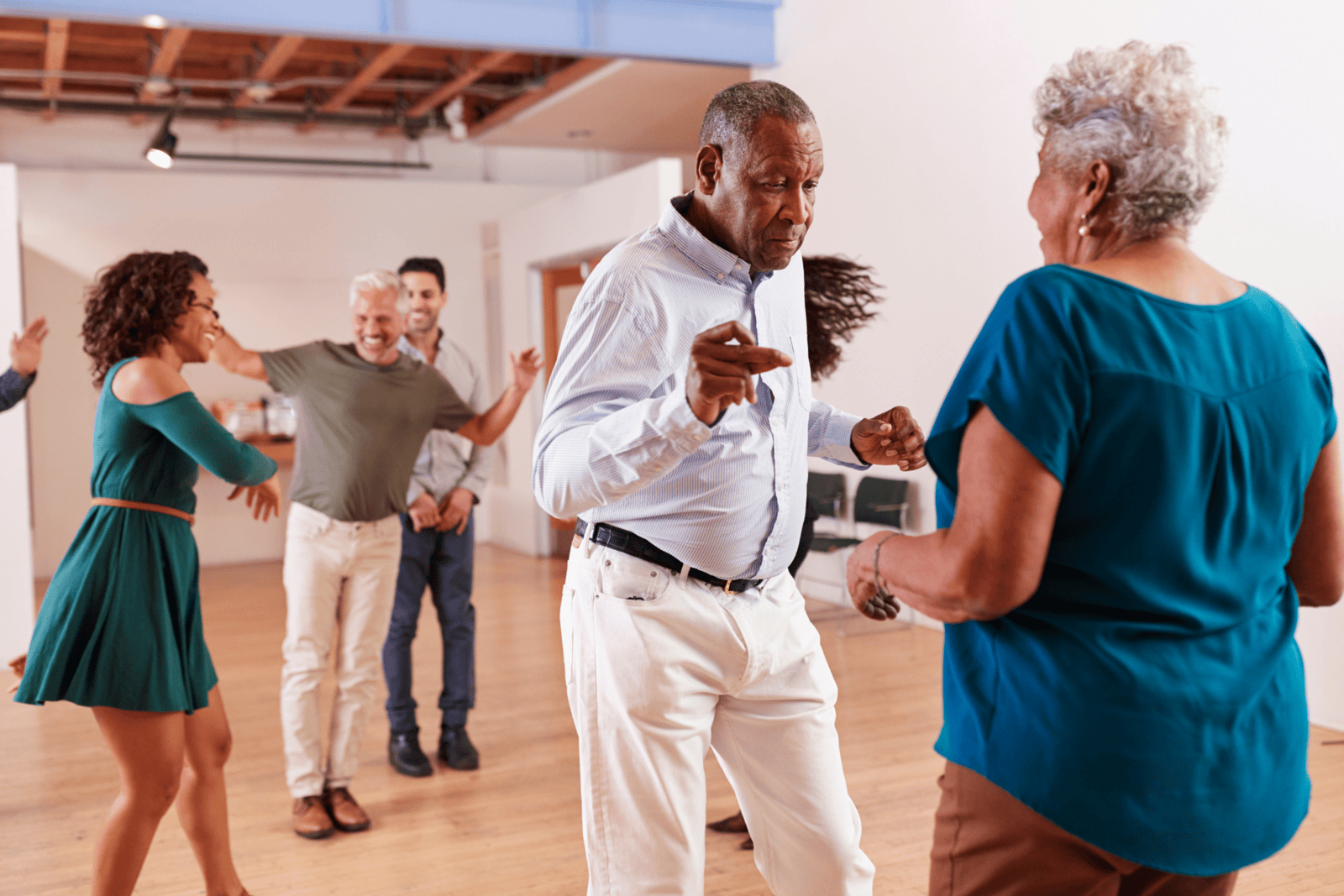
Senior Community Services

Emergency Response Modifications
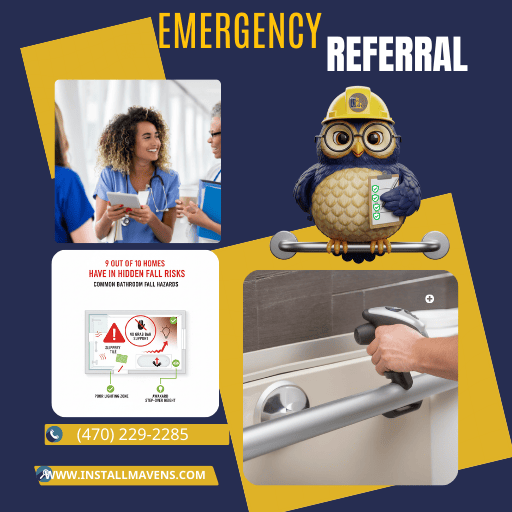
When you need immediate home modifications for hospital discharge or sudden mobility changes, our team can get there same day. We work directly with healthcare providers and families to install essential safety modifications fast, so the transition home is smooth and safe.
ADA Modifications We Handle
Bathrooms
- Walk-in showers with zero-threshold entries (no step to trip over)
- Grab bars positioned at 33-36 inches, anchored to support 250 lbs minimum
- Comfort-height toilets (17-19 inches tall instead of standard 15 inches)
- Accessible sinks with knee clearance underneath
- Slip-resistant flooring
- Lever faucet handles (easier than knobs)
Doorways
- Widened to 32 inches minimum (wheelchairs and walkers need at least 32")
- Lever door handles instead of round knobs
- Thresholds removed or beveled to 1/2 inch max
Kitchen
Lowered countertops (34 inches instead of 36 inches)
Pull-out shelves and accessible storage
Lever handles on cabinets
Accessible sink with knee clearance
Bathrooms
Grab bars for walking support
Improved lighting
Non-slip flooring
Clear pathways (36 inches wide minimum)
Improved lighting
Non-slip flooring
Clear pathways (36 inches wide minimum)
Ramps
1:12 slope ratio (ADA standard—1 inch of rise per 12 inches of run)
Handrails on both sides
Non-slip surface
Level landings at top and bottom
Who Needs ADA Modifications
Homeowners
You or a family member uses a wheelchair, walker, or has mobility challenges. You want your home accessible and safe.

Landlord
Tenant requested reasonable accommodations under Fair Housing Act. You need compliant modifications done right.

Businesses
You're updating your facility to meet ADA requirements or responding to a compliance issue.

Senior Healthcare
You need bulk ADA upgrades across multiple units or common areas.Clinics, therapy centers, medical offices—anywhere patients need accessible bathrooms and entryways.
What ADA Compliance Means
The Americans with Disabilities Act sets standards for accessibility—doorway widths, ramp slopes, grab bar placement, toilet heights, all of it.
If you're modifying a home for someone with mobility issues, following ADA standards means the modifications actually work. If you're a business or facility, following ADA standards keeps you compliant and avoids lawsuits.
We don't just guess at this stuff. We follow the specs Brian used in assisted living facilities for 30 years.
24-48 hour emergency changes for hospital discharge planning and for urgent safety needs.
Schedule Your Virtual or Onsite Assessments
(470) 229-2285
Our ADA Assessment Process
Pricing
Depends on scope. Here's the ballpark:
ADA bathroom modification: $3,000-$12,000 (depends on how much needs changing)
Ramp installation: $1,500-$5,000 (depends on length and materials)
Doorway widening: $500-$1,500 per doorway
Grab bar installation: $150-$300 per bar
Full home ADA assessment: Free with any modification project
Call for an exact quote. We'll assess your situation and give you detailed pricing before we start.
Helpful Links
National Association of Home Builders (NAHB)
Aging-In-Place Resources: AgeInPlace.org for aging-in-place resources.
AARP HomeFit Guide: for senior-focused home accessibility tips.
Centers for Disease Control and Prevention (CDC) Fall Prevention on preventing falls.
National Council on Aging (NCOA) Aging-In-Place Checklist: Link to www.ncoa.org.
Lowe’s ADA Home Modifications: for ADA-compliant product
Energy Star Gas Appliances: for energy-efficient gas appliances.
The Spruce Gas Appliance Safety Tips: for safety guides
Illuminating Engineering Society (IES): for lighting safety and design standards.
This Old House Home Improvement Resources for general installation tips.
U.S. Department of Housing and Urban Development (HUD) Aging-in-Place Resources for federal support programs.
Rebuilding Together: www.rebuildingtogether.org for low-cost home repair programs.